
Metro Bangalore
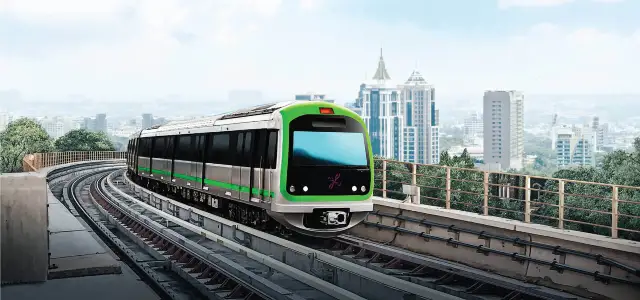
Bangalore, hailed as India’s Silicon Valley, has transformed urban mobility with Metro Bangalore, or Namma Metro, providing fast, eco-friendly, and seamless commuting across the city. Since its launch in 2011, this metro system has become a lifeline for daily commuters, offering a fast, reliable, and eco-friendly transport alternative in Bangalore. With an operational network of 76.9 km, it stands as the second-longest metro network in India, following the Delhi Metro, and continues to expand to accommodate the city’s growing population and rising demand for efficient public transport in Bangalore.
Managed by BMRCL (Bangalore Metro Rail Corporation Limited), the metro network integrates at-grade, underground, and elevated corridors to ensure seamless metro connectivity in Bangalore. Setting benchmarks in transit planning, safety, and commuter convenience, it has become the backbone of urban transport, easing congestion and reducing pollution while connecting key residential, commercial, and IT corridors.
Overview of Metro Lines and Connectivity
Currently, Metro Bangalore operates two main lines – the Purple Line and the Green Line – with four additional lines under construction. Each line is strategically designed to link residential neighborhoods, industrial hubs, IT corridors, educational institutions, and hospitals, enhancing daily commuting efficiency in Bangalore.
Purple Line
The Purple Line, the first operational corridor, spans 37 stations with four interchange points, stretching from Whitefield in the east to Kengeri in the west. Prominent stations include Whitefield, Kadugodi, Pattandur Agrahara, Sri Sathya Sai Hospital, Nallurhalli, Kundalahalli, Channasandra, Indiranagar, Cubbon Park, Balagangadharanatha Swamiji Station, Nayandahalli, Sitharama Palya, Hoodi Junction, Garudacharapalya, Mahadevapura, Swami Vivekananda Road, Halasuru, Trinity, Krishnarajapuram, Benniganahalli, Baiyappanahalli, Mahatma Gandhi Road, Dr BR Ambedkar Station, Vijayanagara, Attiguppe, Deepanjali Nagara, Mysuru Road, Sir M. Visveshwaraya Station, Nadaprabhu Kempegowda Station, Krantivira Sangolli Rayanna Railway Station, Madagi Road, Rajarajeshwari Nagar, Jnanabharathi, Pattanagere, Kengeri Bus Terminal, and Challaghatta.
This line plays a pivotal role in linking IT hubs in Bangalore, major residential areas, and commercial centers, dramatically reducing travel time and improving access to workplaces and shopping districts.
Green Line
The 32-station Green Line stretches 31 km, linking Nagasandra to Silk Institute. Key stations include Madavara, Manjunathanagara, Peenya Industry, Peenya, Yeshwanthpura, Sandal Soap Factory, Nagasandra, Dasarahalli, Jalahalli, Mahalakshmi, Rajajinagara, Mahakavi Kuvempu Road, Sampige Road, Nadaprabhu Kempegowda Station, Chikpete, Yelachenahalli, Goraguntepalya, Srirampura, Lalbagh Botanical Garden, Krishna Rajendra Market, Chikkabidarakallu, Konanakunte Cross, Doddakallasandra, National College, South End Circle, Jayanagar, Rashtreeya Vidyalaya Road, Banashankari, Jaya Prakash Nagar, Vajarahalli, Thalaghattapura, and Silk Institute.
The Green Line is integral to connecting industrial zones, educational institutions, and residential complexes, supporting smooth daily commuting in Bangalore.
Upcoming Lines: Yellow, Blue, Orange, and Pink
Yellow Line: Covering 18 km with 16 stations, this line will link RV Road to Bommasandra, opening on 2nd April 2025. Key stations include Central Silk Board, Bommanahalli, Hongasandra, Kudlu Gate, Singasandra, Hosa Road, RV Road, BTM Layout, Huskur Road, Ragigudda, Jayadeva Hospital, Beratena Agrahara, Electronic City, Konnapana Agrahara, Bommasandra, and Hebbagodi.
Blue Line: Stretching 58.1 km with 30 stations, the Blue Line passes near Godrej Thanisandra, with Doddajala as the nearest station (about 40 minutes away). Notable stops include KR Puram, Mahadevpura, Kodibisanahalli, Kadubeesanahalli, Bellandur, Ibbalur, Agara Lake, HSR Layout, Doddanakundi, ISRO, Marathahalli, Silk Board, DRDO Sports Complex, Horamavu, Kodigehalli, Bagalur Cross, Kasturinagara, Hebbal (interchange with Orange Line), Doddajala, Veerannapalya, HRBR Layout, Kempegowda International Airport Terminal, Kalyan Nagar, Jakkur Cross, HBR Layout, Yelahanka, Nagawara (interchange with Pink Line), and Kempapura. This line enhances metro connectivity for East Bangalore IT corridors and residential zones.
Orange Line: Part of Phase 3, the Orange Line will run along the Outer Ring Road from Hebbal to JP Nagar, connecting key stations such as:
· Freedom Fighters Cross
- PES Institute of Technology
- Vinayaka Layout
- B E L Circle
- Nagarabhavi B D A Complex
- Patelappa Layout
- Peenya
- Hebbala
- Sumanahalli Cross
- Kanteerava Studio
- Jayaprakash Nagara
- Hosakerahalli Cross
- Chowdeshwari Nagara
- Kamakya Bus Depot
- Bahubhali Nagara
- Mysuru Road
- Nagarabhavi Circle
- Dr Ambedkar Institute of Technology
- Kempapura
Pink Line: Stretching across 18 stations, the Pink Line will seamlessly link Nagawara to Gottigere, enhancing connectivity across the city. Key stops include Kalena Agrahara, Hulimavu, Dairy Circle, IIM Bangalore, JP Nagar 4th Phase, Swagath Road Cross, Rashtriya Military School, Cantonment, Venkateshpura, Jayadeva Hospital, Lakkasandra, Langford Town, MG Road, Shivaji Nagar, Pottery Town, Tannery Road, Nagawara, and Kadugundanahalli. This line strengthens metro connectivity for south and central Bangalore.
Metro Timings and Ticketing
The metro operates with commuter-friendly schedules in Bangalore:
- Weekdays: 5 AM – 11 PM
- Sundays: 7 AM – 11 PM
- Saturdays & Public Holidays: 6 AM – 10:30 PM
Frequency: Every 5 minutes during peak hours
Ticket Prices: Rs. 10 – Rs. 45 (depending on distance)
Monthly Pass: Rs. 1000 – Rs. 3000
Frequent trains and affordable fares make Metro Bangalore a preferred choice for daily commuting and traffic-free travel across Bangalore.
Why Metro Bangalore Matters
Metro Bangalore is more than a transit system; it drives urban growth, economic development, and sustainable living in Bangalore. By reducing reliance on road transport, it eases congestion and pollution while connecting emerging residential areas with IT hubs, educational institutions, hospitals, and commercial zones. The upcoming lines, with well-planned interchanges, ensure seamless travel, boosting both convenience and real estate investment potential near metro corridors.
Conclusion
With its expanding network, strategic connectivity, and cost-effective fares, Metro Bangalore continues to redefine urban commuting. The upcoming Yellow, Blue, Orange, and pink lines will make the public transport system even more comprehensive, cementing Bangalore’s position as a modern, forward-looking city with superior public transport infrastructure.